


Myths in the field of robotics and automation
WEBER sets the record straight: 5 Myths about the field of robotics and automation
![[Translate to English:] Mythen über Robotik und Automation](/fileadmin/_processed_/0/b/csm_2022_weber_automation_31d8e7f5ae.webp 1x, /fileadmin/_processed_/0/b/csm_2022_weber_automation_ba77d95651.webp 2x, /fileadmin/_processed_/0/b/csm_2022_weber_automation_7d7ff7cfc1.webp 3x)
WEBER sets the record straight: 5 Myths about the field of robotics and automation
Myth 1: Robotics and Automation are mainly for reducing operational costs False!
In general, automation solutions help address the growing global shortage of skilled labor, the need to automate the handling of heavy workpieces and materials to enhance workplace safety, the desire to reallocate labor to less monotonous, more value-added processes, advance digitization, and optimize manufacturing processes.
Myth 2: Sustainable production requires the use of industrial robots Correct!
Industrial robots minimize production waste and material consumption. Vision-guided industrial robots from WEBER can also support recycling by identifying individual components and breaking them down into recyclable parts.
Myth 3: Robots are job killers and replace a significant number of employees False!
This argument is clearly a myth. Nowadays, almost every successful production and logistics company employs robotics and automation processes to increase efficiency. Another important reason: by using robots, employees are relieved from monotonous, dangerous, or unhealthy tasks. The workforce remains an essential part of the production or work process.
Myth 4: Automation is expensive to implement False!
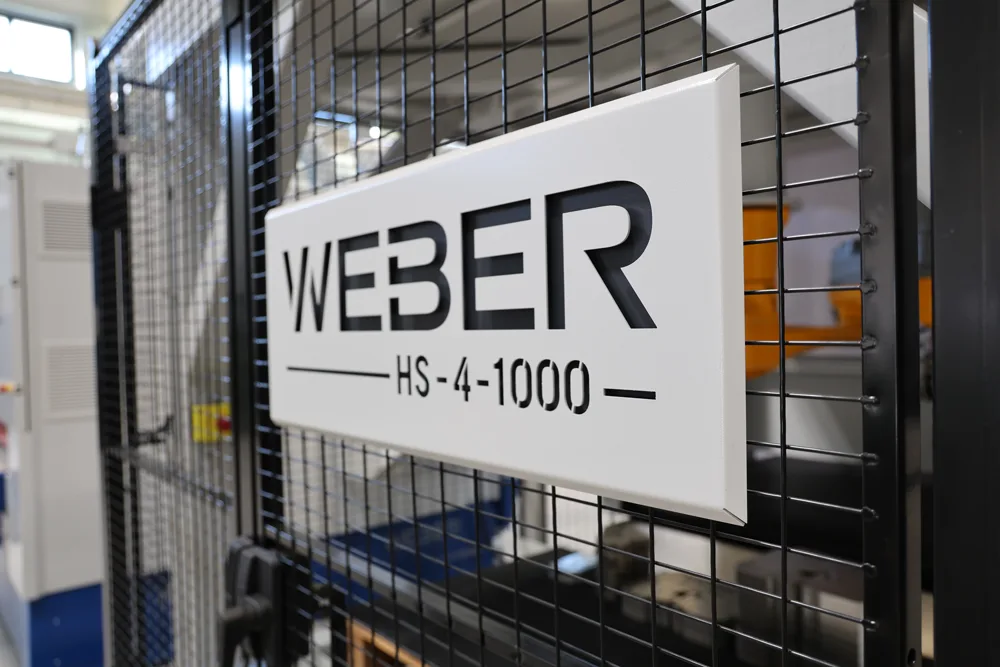
With appropriate automation, labor and employees can be effectively redeployed in other areas, leading to significant savings and a rapid return on investment for the specific automation project. For example, the Weber Handling Cell HS-4-1000 has a one-year payback period in a three-shift operation. Furthermore, robots do not get sick and require minimal maintenance.
Myth 5: Operating robots is complex and time-consuming False!
All machines from WEBER come standard with a 9-inch operator terminal based on Siemens control. Thanks to the graphical user interface, controlling industrial robots and handling systems is notably simple and efficient. The matrix display only shows the information necessary for the current operation, and users only need to select the desired type of workpiece processing. Furthermore, WEBER's robotics and automation solutions are entirely "teach-free," meaning that the robots automatically recognize and teach the workpieces without requiring prior knowledge of programming or robotics from the user. With Weber's automation solutions, customers do not need employees with robot or programming knowledge.