

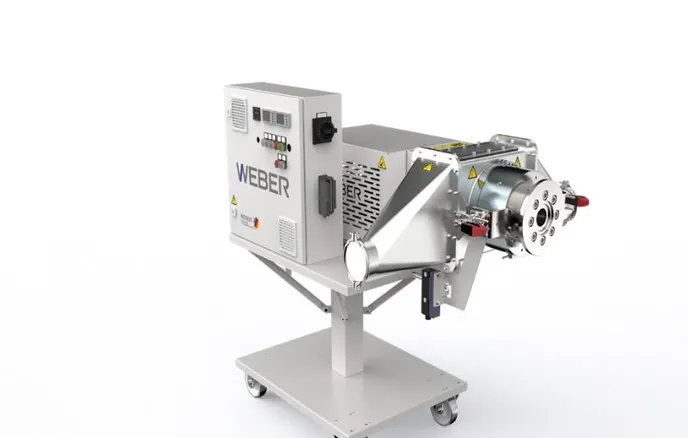
Granulation
Granulation – Precision for High-Quality Plastic Processing
Pelletizing is a key process step in plastics processing and plays a decisive role in determining the quality, cost-effectiveness, and reproducibility of the final product. Stable and precisely controlled process management is particularly crucial for challenging materials such as soft and rigid PVC, recycled materials, or highly filled compounds, as different material properties place specific demands on processing and the pelletizing process.
Today, modern pelletizing systems must do more than just shape material: they must respond flexibly to different formulations, operate energy-efficiently, ensure consistently high product quality, and enable easy operation. Especially with soft and hard PVC, the precise adjustment of process parameters is crucial for reliably maintaining material properties and achieving reproducible results.
Modern process engineering relies on intelligent, robust solutions and maximum process reliability.
The result is a stable, economical, and sustainable production process with the highest quality—from raw material to finished granules.
What does modern granulation mean?
Modern pelletizing is much more than simply shaping molten plastic. It is a precisely controlled process in which multiple parameters must be monitored simultaneously: consistent melt quality and homogeneity, defined pressure and temperature control, and stable material conveyance even with fluctuating formulations. Equally critical are reproducible pellet shape and quality, as well as minimizing thermal and mechanical stress on the material.
The goal is consistently high-quality pellets—regardless of raw material fluctuations or recycled content—and thus the foundation for high process reliability, clean production, and optimal further processing.
Modern system designs combine these requirements with maximum flexibility and the right wear protection to ensure stable and economical continuous operation.
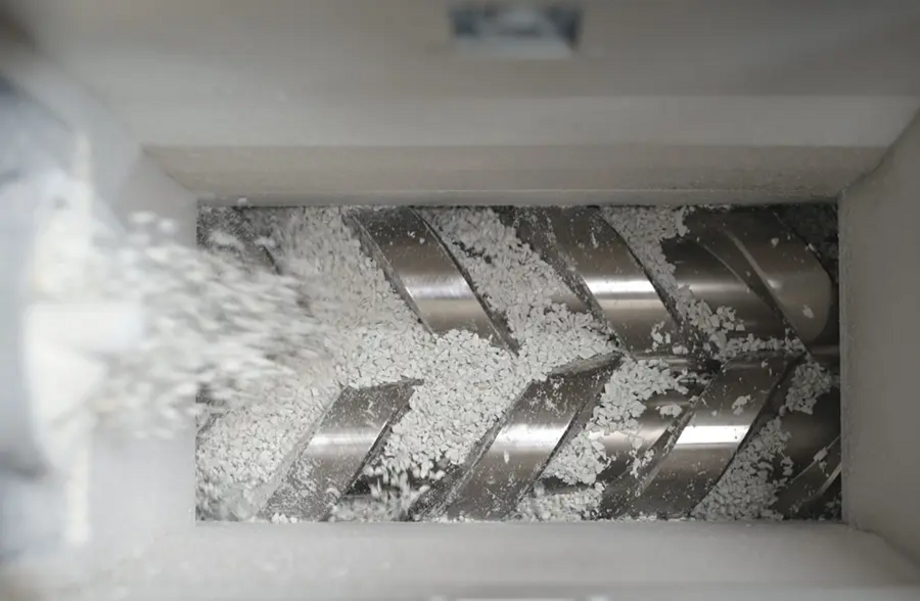
Recycling - Resource-efficient PVC pelletizing
PVC granulation makes an important contribution to the circular economy by reducing waste and returning materials to the production cycle. The goal is to keep PVC usable for as long as possible and to use resources efficiently.
This process involves the recycling of PVC dryblends and regrind made from virgin material, production residues, and post-consumer material. The result is high-quality regranulate that can be reused in a variety of applications.
With proper process control, even materials of varying quality can be reliably processed and converted into consistently high-quality granules. This supports the sustainable and economical use of PVC materials.
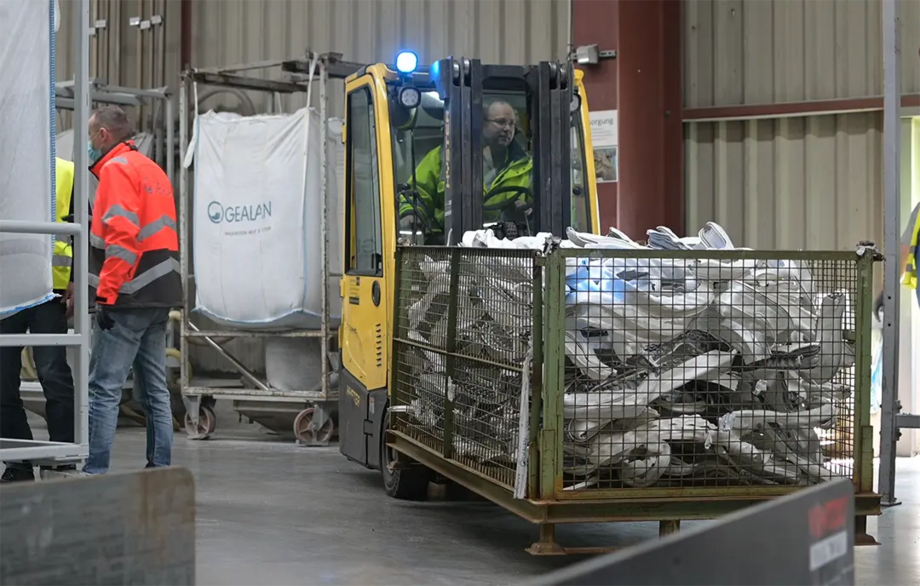
Complete pelletizing systems from a single source
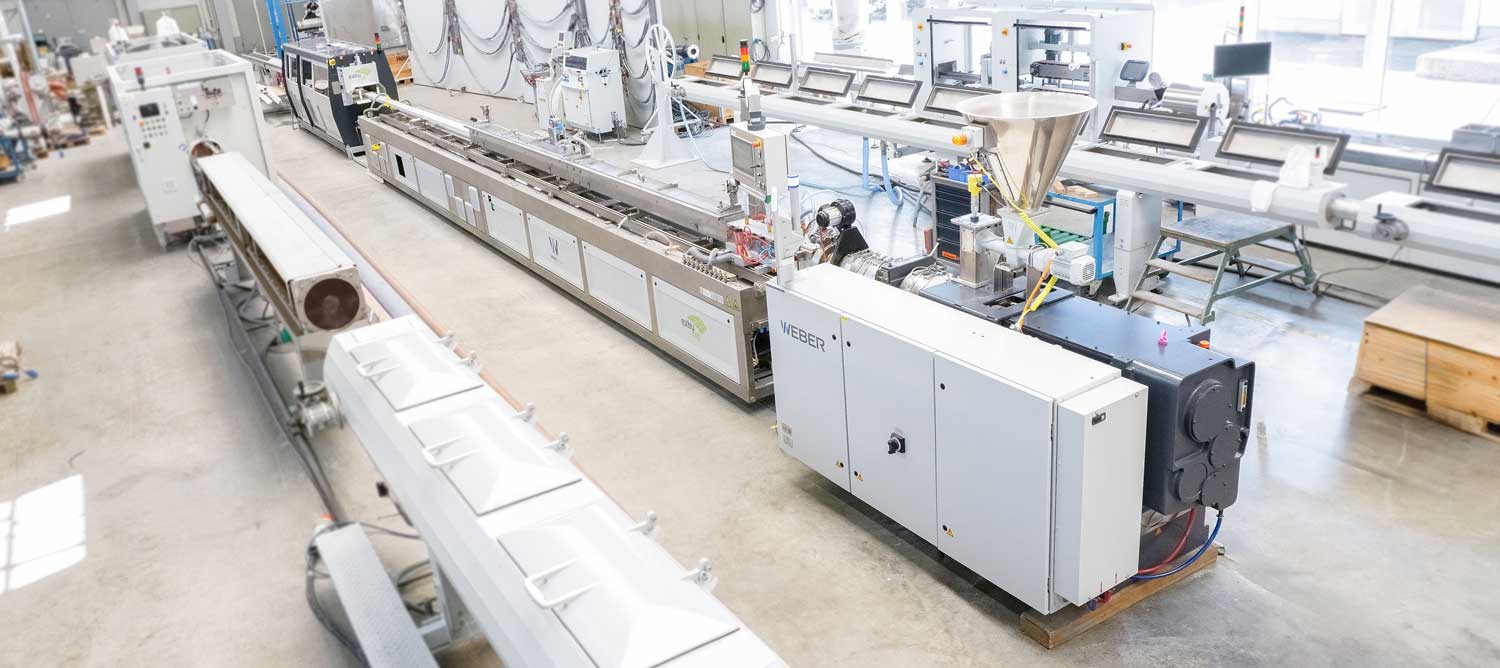
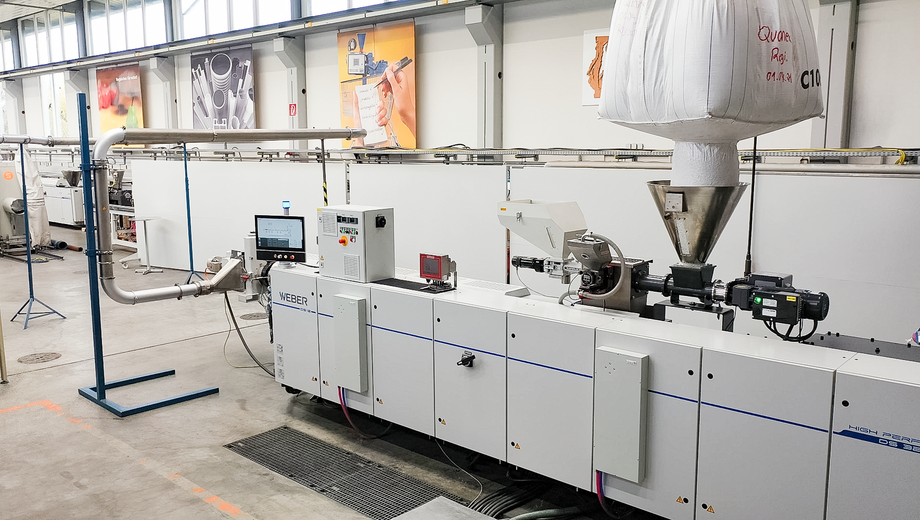
We design and build custom granulation lines for PVC processing—from dosing to bagging. All process steps are optimally coordinated to form a fully synchronized system that ensures maximum efficiency, process reliability, and consistently high product quality.
Our solutions combine all essential functions of material preparation, extrusion, pelletizing, cooling, conveying, and packaging into a seamless system precisely tailored to the material, formulation, and application.
We rely on application-specific technologies and customer-specific equipment—for example, custom-designed agitator concepts and other process-optimizing components that are employed depending on the formulation and material properties.
With output capacities of up to 2,500 kg/h, our systems enable the economical processing of virgin and recycled materials while maintaining high stability, even under fluctuating material conditions.
For a wide range of applications in the PVC sector – our pelletizing solutions are ideally suited for:
- Pelletizing blends for the pipe and profile industry
- Processing of soft PVC and hard PVC (uPVC)
- Other applications upon request
Explore granulation systems
WEBER Extrusion Technology – Performance Meets Intelligence
Our extruder technology combines high performance with intelligent process control and maximum operational reliability. The result is stable and reproducible PVC and recycling processes with improved and consistent material flow. This leads to clean production, significantly improved handling throughout the entire process, and noticeably higher process stability.
The technical foundation is a robust and energy-efficient drive system with high torque transmission, combined with durable WEBER “Long Life” gearboxes designed for continuous operation. An integrated mechanical guard between the gearbox and the screw prevents damage from external impacts and further enhances operational reliability.
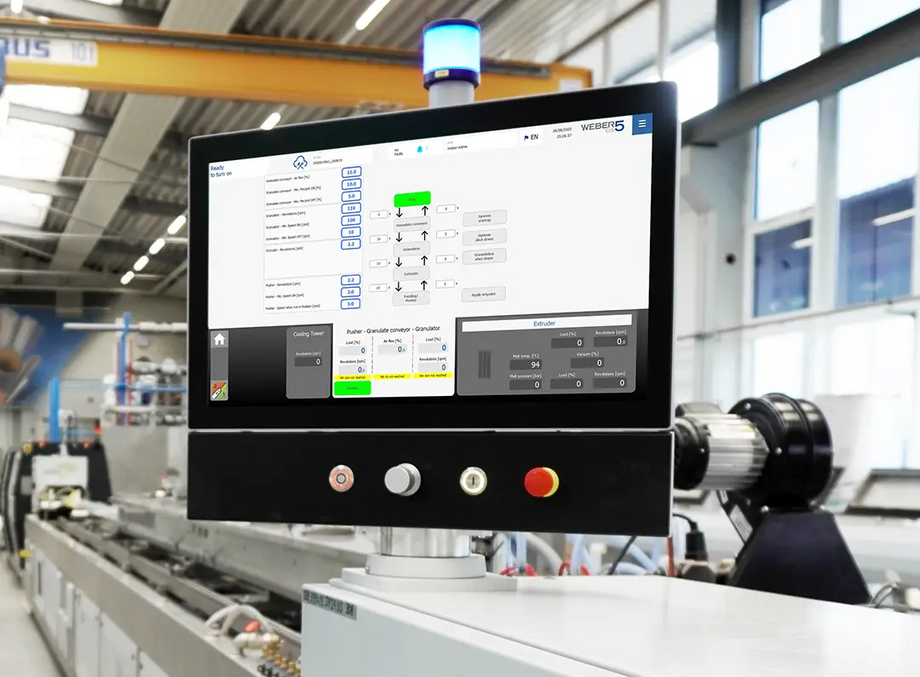
An intelligent monitoring system with early warning functions, a digital maintenance manager, and a 360° LED status display on the control cabinet ensures maximum process reliability and transparency. In addition, intelligent heating current controls optimize energy usage and extend the service life of the heating components.
The concept is rounded out by flexible machine solutions featuring a Siemens control system (OS5) and OPC UA interfaces, which enable easy operation and seamless integration into Industry 4.0 environments. Comprehensive wear protection systems further ensure long service life and consistently reliable performance.
Contact, Opening Hours, Locations
Solutions for the future - Contact us
Contact